Most builders understand the importance of getting leads. Many even have fancy lead magnets to download, and automated email nurture sequences to follow. But usually, that’s about where the journey ends.
The problem is, building a home isn’t an impulse purchase.
Someone might download your lead magnet today simply because they’re curious. They might just be having a look. Getting a feel for what’s possible – what sort of house they’d like. Getting a feel for the price. Seeing what builders are out there.
Whatever it is, they might not be ready to build for another two, three, or even five years.
If your follow-up stops when your nurture sequence does, you’re assuming your prospect is ready to build on your timeline. More often than not, they aren’t.
And a year later… or two… or five… when they are ready to build, if you’ve forgotten about them, there’s a good chance they’ve forgotten about you too.
That’s potentially a million-dollar building contract slipping through your fingers.
In Reality, a Nurture Sequence Should Be the Beginning… Not the End
Once your nurture sequence finishes, your prospects shouldn’t sink into the forgotten depths of your CRM… never to be heard from again. You should keep the “conversation” going – through email newsletters, blog posts, social media content, and so on.
The trick, however, is to keep the conversation educational, not salesly.
Give them tips and tricks. Point out traps to avoid. Share client wins. Share your process. Slowly but surely show them why you’re the best at what you do.
Then, when they’re finally ready to build, who do you think they’ll call?
This Played Out Like Clockwork
With One of Our Builder Clients Recently
After sending a proposal to this builder (who was, of course, just a prospect at the time), he was automatically added to our post-proposal email nurture sequence.
After that sequence dried up and we still hadn’t heard anything back from him, we just reached out and asked, in simple terms, if he was still keen.
He said he just wasn’t ready to make a decision yet.
Now, instead of just leaving it at that, we then added him to our regular newsletter mailing list, where we shared educational content. Valuable content.
A few months later, he got back in touch.
The first thing he said was that he’d ultimately decided to go with us because we actually did what we ourselves advocate for:
We stayed top of mind.
We weren’t the cheapest option. In fact, we were nearly twice the price of the other marketing people he was considering working with. But while he was weighing up his options, we kept fostering the relationship. And by the time he was ready to lock in a decision, he already had the confidence to choose us.
This happened over a timeframe of a few months. But we’ve seen the exact same thing happen over a far longer span of time.
In fact…
One of Our Clients Came Back
After More Than 20 Years
The first time we’d worked together, back in the day, we’d helped him completely transform his business. He’d bought it for next to nothing, and over the years, built it into a multi-million-dollar company. We played a significant part in that journey through the marketing we did for him.
Then life moved on.
Over the next couple of decades, communication was fairly infrequent, but it was there. Really, all we did was keep our toes in the water with a monthly email newsletter. Barely any of our comms were personalised. He was just a name on our mailing list.
Then, when he finally needed marketing support again, he didn’t go looking for anybody else. He came straight back to us.
Twenty years later, and the relationship was still there. All because we made an occasional appearance in his inbox.
The Takeaway: A Nurture Sequence Is a Great Start
… but it shouldn’t be the end of the conversation.
People build when they’re ready, not when you’re ready. Sometimes that’s next month. Sometimes it’s five years from now.
Keep showing up. Keep educating. Keep providing value. Keep top of mind.
And then, when they’re finally ready to build, they’ll remember the builder who never forgot about them.
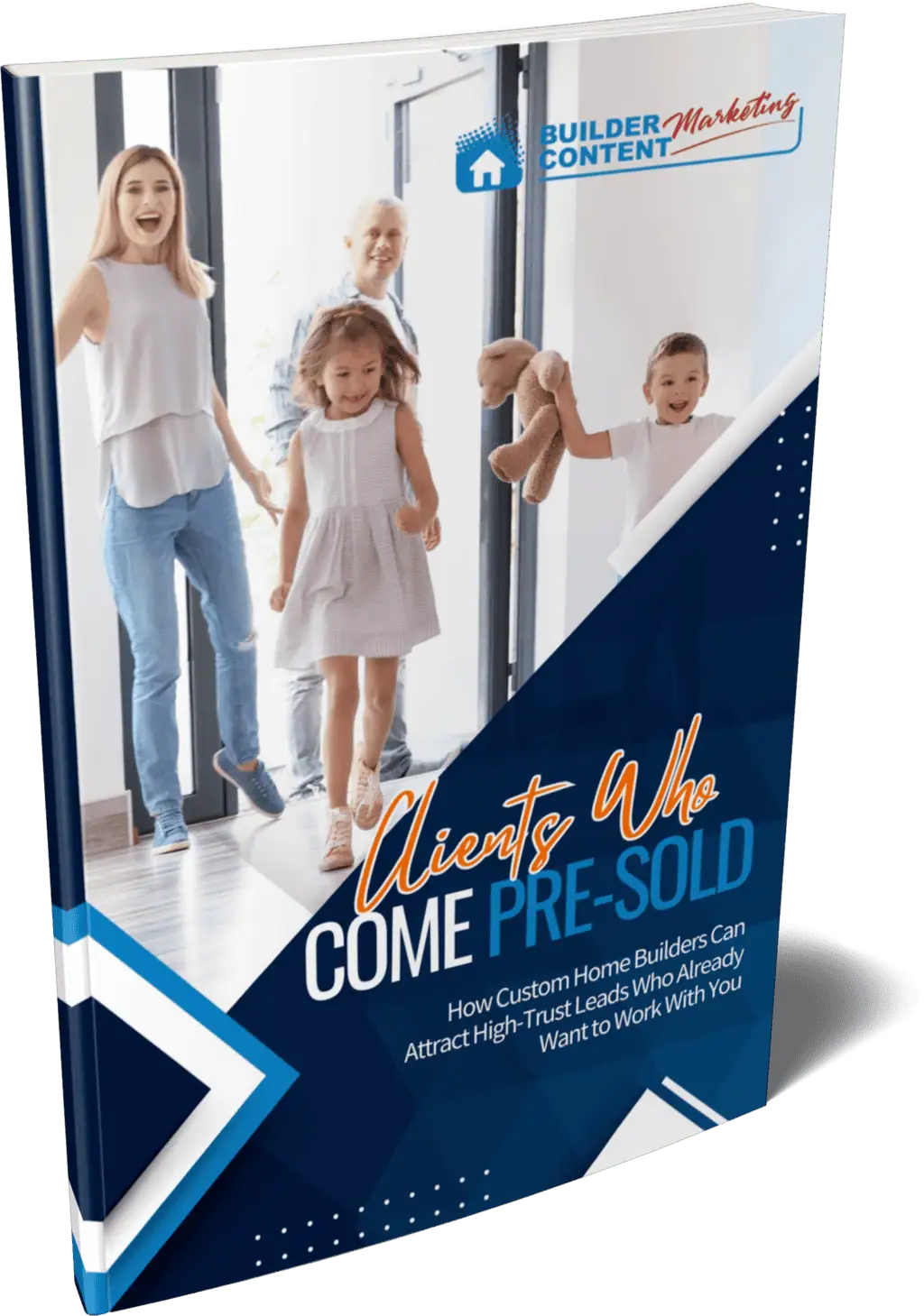
Of course, there’s more to building a steady stream of high-quality leads than staying top of mind – which is why we’ve put this guide together:
The Secret To Getting Clients Who Come Pre-Sold
Inside, you’ll find:
- The new rules of builder lead generation (and why ignoring this will keep you stuck with price-shoppers and tyre-kickers)
- The surprising 30-piece content rule that can 8x your conversion rate for custom builds and major renos
- The 3 tiers of leads (and why most builders waste their budget targeting the wrong two)
- How to stop chasing clients and start educating serious, design-ready buyers who value your process
- The Proven Marketing Eco-System Blueprint that turns cold strangers into pre-sold, high-trust clients who show up saying, “We’ve already decided we want to build with you.”
Download it, take your time flicking through, and if you’d like some help putting it into action, we’ll be here.
Frequently Asked Questions
What is a lead nurture sequence, and why isn’t it enough on its own?
A nurture sequence is a series of automated emails that follow up with a lead after they first make contact, for example after they download a guide or receive a proposal. It is a strong start, but building a home is not an impulse purchase. Many builder leads are not ready to build for another two, three or even five years, so if your follow-up stops when the sequence ends, you risk being forgotten by the time they are ready.
How long should a builder keep following up with a lead?
For as long as it takes them to be ready. People build when they are ready, not when you are ready, and that can be next month or five years away. The builders who win the big contracts are the ones who keep nurturing their builder leads long after the initial nurture sequence has finished.
What should I send leads once the nurture sequence ends?
Keep the conversation going with educational, not salesy, content: email newsletters, blog posts, social media, practical tips, traps to avoid, client wins and a look at your process. The goal is to stay top of mind and keep proving why you are the right builder, without constantly pushing for a sale.
Won’t staying in touch for years annoy prospects?
Not if the content is genuinely useful rather than a constant sales pitch. Even a simple monthly newsletter is enough to keep you top of mind. One of our clients came back after more than twenty years on our mailing list, purely because we made an occasional, valuable appearance in his inbox.
How does staying top of mind help win higher-value builds?
High-value clients rarely choose on price alone. When you nurture the relationship over time you build trust and authority, so when the prospect is finally ready they already have the confidence to choose you, even if you are not the cheapest option. Industry authorities such as the Association of Professional Builders make the same case: consistent, long-term marketing wins higher-value work far more reliably than one-off campaigns.